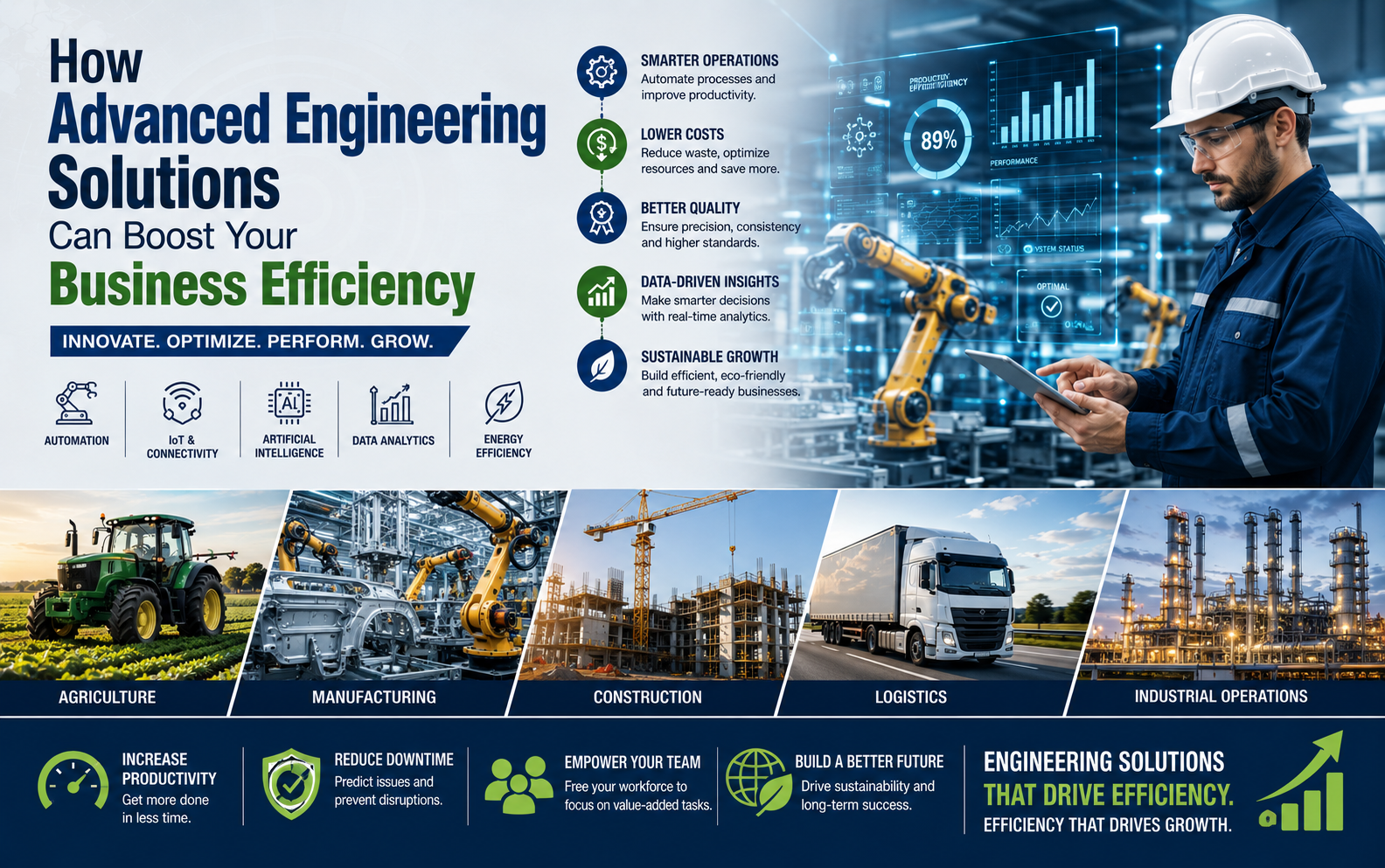
In today’s highly competitive business environment, organizations across industries are constantly seeking ways to improve productivity, reduce costs, and maximize profitability. Whether in manufacturing, agriculture, construction, logistics, or industrial operations, efficiency has become the key factor that determines long-term success. One of the most effective ways to achieve operational excellence is through the adoption of advanced engineering solutions.
Advanced engineering solutions combine modern technology, innovative design, automation, data analytics, and precision-driven systems to streamline business processes. These solutions help organizations optimize resources, improve product quality, reduce downtime, and enhance overall performance. As industries continue to evolve, businesses that embrace engineering innovations gain a significant advantage over competitors.
Understanding Advanced Engineering Solutions
Advanced engineering solutions refer to the integration of modern technologies and engineering practices designed to improve operational efficiency and solve complex business challenges. These solutions may include:
• Automation systems
• Precision engineering
• Internet of Things (IoT) technologies
• Artificial Intelligence (AI)
• Data analytics platforms
• Smart machinery and equipment
• Predictive maintenance systems
• Energy-efficient technologies
The primary objective of these technologies is to eliminate inefficiencies, reduce manual intervention, and create smarter workflows that deliver better results with fewer resources.
Enhancing Productivity Through Automation
Automation is one of the most impactful engineering advancements in modern business operations. Traditional processes often rely heavily on manual labor, which can lead to inconsistencies, delays, and human errors. Automated systems can perform repetitive tasks with greater speed, accuracy, and reliability.
For example, manufacturing facilities use automated production lines to increase output while maintaining consistent quality standards. In agriculture, automated machinery can perform planting, irrigation, harvesting, and monitoring tasks with minimal human intervention.
The benefits of automation include:
• Faster production cycles
• Reduced labor dependency
• Improved operational consistency
• Lower error rates
• Increased production capacity
By automating routine activities, businesses can allocate their workforce to more strategic and value-adding tasks.
Reducing Operational Costs
Cost reduction remains a top priority for organizations of all sizes. Advanced engineering solutions help businesses identify inefficiencies and eliminate unnecessary expenses.
Several areas contribute to cost savings:
Labor Optimization
Automated systems reduce the need for extensive manual labor while improving productivity. Businesses can achieve more output without significantly increasing workforce costs.
Waste Reduction
Precision technologies ensure that materials are used efficiently. Whether it is raw materials in manufacturing or fertilizers in agriculture, accurate application reduces waste and saves money.
Energy Efficiency
Modern machinery is designed to consume less energy while delivering superior performance. Reduced energy consumption translates into lower utility bills and improved sustainability.
Predictive Maintenance
Engineering solutions equipped with sensors and monitoring systems can detect potential issues before equipment failure occurs. This proactive approach reduces repair costs and prevents expensive downtime.
By minimizing unnecessary expenditures, businesses can improve profit margins and reinvest savings into growth initiatives.
Improving Product Quality and Consistency
Maintaining high-quality standards is essential for customer satisfaction and brand reputation. Advanced engineering solutions play a critical role in improving product quality through precision and consistency.
Modern equipment can perform tasks with exceptional accuracy, ensuring that products meet predefined specifications every time. Automated quality control systems can identify defects early in the production process, preventing faulty products from reaching customers.
Benefits of improved quality include:
• Higher customer satisfaction
• Reduced product returns
• Stronger brand reputation
• Increased customer loyalty
• Better market competitiveness
Consistency in product quality helps businesses build trust and establish long-term relationships with customers.
Leveraging Data for Smarter Decision-Making
Data has become one of the most valuable assets for modern businesses. Advanced engineering solutions often incorporate data collection and analytics capabilities that provide actionable insights into operations.
Organizations can monitor:
• Production performance
• Equipment utilization
• Resource consumption
• Supply chain efficiency
• Workforce productivity
Through real-time data analysis, businesses can identify bottlenecks, forecast trends, and make informed decisions. Instead of relying on assumptions, managers can use accurate information to improve processes and allocate resources effectively.
Data-driven decision-making enables organizations to respond quickly to changing market conditions and maintain a competitive edge.
The Role of IoT in Business Efficiency
The Internet of Things (IoT) has transformed the way businesses manage operations. IoT technology connects machines, devices, and systems through sensors and networks, allowing real-time communication and monitoring.
For example, smart sensors can monitor machine temperature, vibration levels, and performance metrics. If unusual patterns are detected, maintenance teams can be alerted immediately.
Key benefits of IoT include:
• Real-time monitoring
• Improved equipment reliability
• Reduced downtime
• Better resource management
• Enhanced operational visibility
Businesses gain greater control over their operations, enabling faster responses to potential issues and minimizing disruptions.
Increasing Efficiency in Agriculture
Agriculture is one of the industries experiencing significant benefits from advanced engineering solutions. Modern farming operations face challenges such as labor shortages, rising costs, and increasing demand for food production.
Advanced agricultural equipment helps farmers:
• Improve planting accuracy
• Optimize irrigation systems
• Reduce fertilizer waste
• Increase harvesting efficiency
• Monitor crop health
Precision farming technologies use GPS systems, sensors, and analytics to ensure that resources are applied exactly where needed. This results in higher crop yields, lower operational costs, and improved sustainability.
By adopting modern engineering solutions, agricultural businesses can achieve greater productivity while preserving valuable natural resources.
Streamlining Manufacturing Operations
Manufacturing companies are increasingly investing in advanced engineering technologies to remain competitive in global markets. Smart factories leverage automation, robotics, and connected systems to optimize production processes.
Engineering innovations help manufacturers:
• Reduce production delays
• Improve workflow efficiency
• Enhance inventory management
• Increase equipment uptime
• Ensure consistent product quality
Smart manufacturing environments provide real-time visibility into every stage of production, allowing businesses to identify and resolve issues quickly.
The result is a more agile and efficient operation capable of meeting customer demands while controlling costs.
Supporting Sustainable Business Practices
Sustainability has become a major consideration for modern organizations. Customers, investors, and regulators increasingly expect businesses to operate responsibly and minimize environmental impact.
Advanced engineering solutions contribute to sustainability by:
• Reducing energy consumption
• Minimizing material waste
• Optimizing resource utilization
• Lowering carbon emissions
• Improving operational efficiency
For example, energy-efficient machinery consumes less power while delivering higher performance. Precision technologies ensure that resources such as water, fuel, and raw materials are used effectively.
Sustainable operations not only benefit the environment but also improve profitability by reducing operating expenses.
Enabling Business Growth and Scalability
As businesses grow, operational complexity increases. Without efficient systems, expansion can lead to inefficiencies, higher costs, and reduced performance.
Advanced engineering solutions provide the scalability needed to support growth. Automated systems, digital monitoring tools, and integrated workflows enable organizations to handle increased demand without compromising quality or efficiency.
Scalable operations allow businesses to:
• Expand production capacity
• Enter new markets
• Manage larger workloads
• Improve customer service
• Maintain operational control
Organizations that invest in engineering innovation position themselves for long-term success in an increasingly competitive marketplace.
Conclusion
Advanced engineering solutions are no longer optional for businesses seeking sustainable growth and operational excellence. From automation and IoT integration to precision engineering and data analytics, these technologies help organizations improve productivity, reduce costs, enhance quality, and support sustainability goals.
Whether operating in agriculture, manufacturing, construction, or industrial sectors, businesses that embrace modern engineering innovations gain a significant competitive advantage. By investing in advanced technologies today, organizations can create smarter, more efficient operations that drive profitability and long-term success.
In a rapidly evolving business landscape, advanced engineering solutions represent the foundation for future growth, innovation, and efficiency.
Agriculture & Food Processing Machinery Manufacturer ★ AaryaTech By Ashirwad Agro Food Technology Pvt. Ltd. ★ Agriculture & Food Processing Machinery Manufacturer ★ AaryaTech By Ashirwad Agro Food Technology Pvt. Ltd. ★ Agriculture & Food Processing Machinery Manufacturer ★ AaryaTech By Ashirwad Agro Food Technology Pvt. Ltd. ★Agriculture & Food Processing Machinery Manufacturer ★ AaryaTech By Ashirwad Agro Food Technology Pvt. Ltd. ★ Agriculture & Food Processing Machinery Manufacturer ★ AaryaTech By Ashirwad Agro Food Technology Pvt. Ltd. ★ Agriculture & Food Processing Machinery Manufacturer ★ AaryaTech By Ashirwad Agro Food Technology Pvt. Ltd. ★
Order by phone
6359132255

AaryaTech, operating under Ashirwad Agro Food Technology Pvt. Ltd., is a prominent manufacturer and supplier of industrial food processing, packaging, and powder mixing machinery. They specialize in building equipment for the agricultural, food, and pharmaceutical sectors.
shop
about
© Copyright 2026 AaryaTech By Ashirwad Agro Food Technology Pvt. Ltd. | All Rights Reserved | Design by 247 Digital Marketing

Affordable, reliable and customized machinery for farmers, food processors, entrepreneurs, and small businesses.